Tourniquet Triage: Why "Two is One, One is None" in the Backcountry
A single tourniquet might not be enough to stop a massive arterial bleed. Discover the physiological reasons why carrying at least two tourniquets is a non-negotiable rule of backcountry survival.
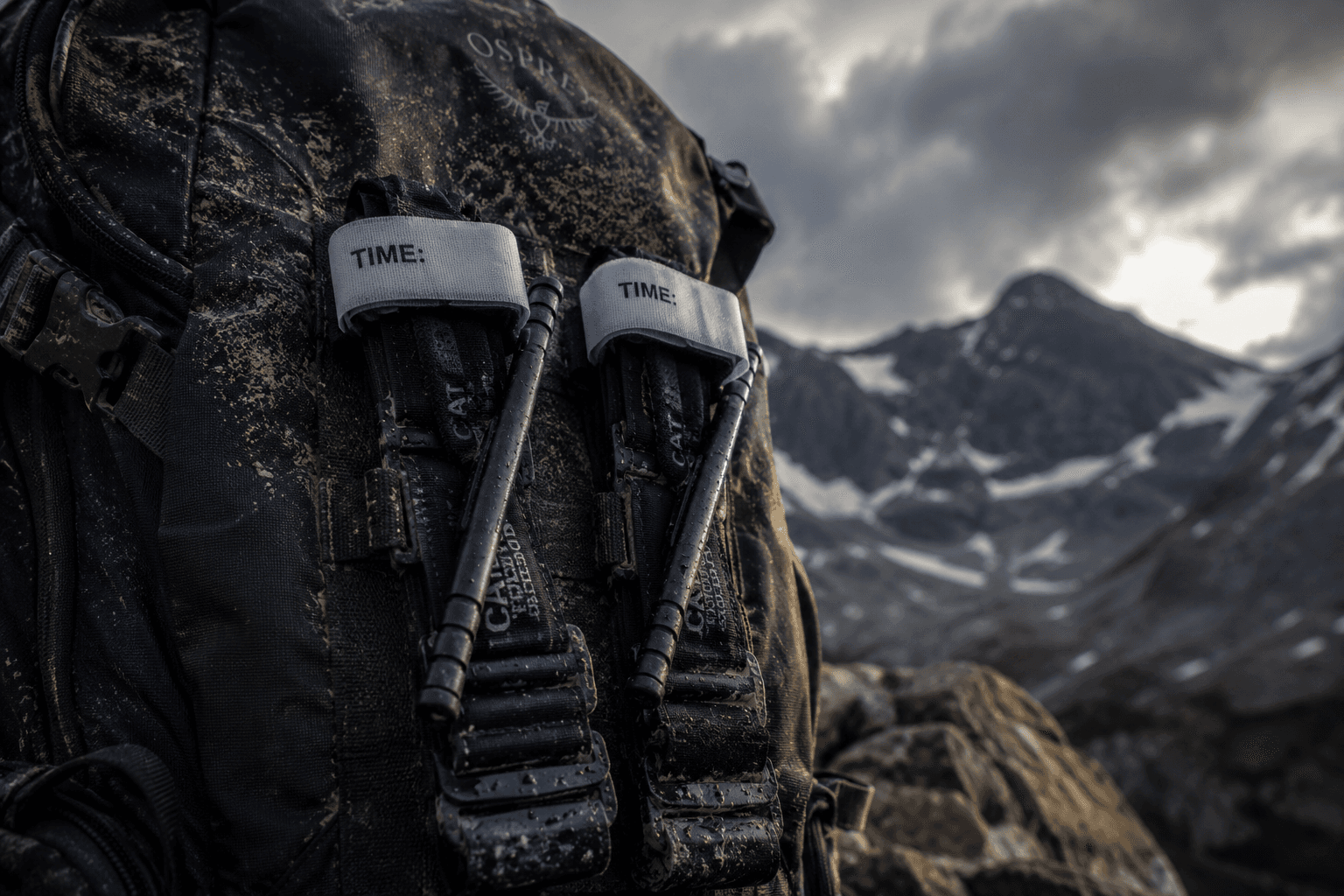
You are dealing with a catastrophic chainsaw or climbing accident resulting in a severed femoral artery. You do everything right: you drop to your knees, pull the Combat Application Tourniquet (CAT) from your belt, loop it high and tight around the thigh, and twist the windlass. The bleeding slows, but the bright red, pulsating fountain doesn't completely stop.
You twist the windlass harder, but it’s maxed out. Blood is still pooling in the dirt. You reach into your medical kit for a backup, only to realize you packed just one tourniquet to "save weight." In less than two minutes, your patient will bleed to death.
The Anatomy of a Failed Tourniquet
In a controlled urban environment, a single tourniquet applied to an average civilian often achieves hemostasis. However, wilderness medicine deals with outdoor athletes—mountaineers, skiers, and hunters—who possess massive, dense quadriceps and hamstring muscles.
"Two is One, One is None: In the backcountry, always carry at least two commercial tourniquets. Thick, muscular thighs of hikers and climbers frequently require two tourniquets applied side-by-side to fully occlude the femoral artery." – Dr. Mouine Khalil Errahmane Ameur, Off-Grid Medical Care
When you apply a single tourniquet to a highly muscular thigh, the pressure must crush through inches of dense tissue to compress the deep femoral artery against the femur. If the tourniquet is only tight enough to crush the superficial veins but not the deep artery, it creates a deadly "loose tourniquet" effect. Arterial blood continues to pump into the limb, but venous blood cannot exit. This drastically accelerates blood loss and induces rapid compartment syndrome.
The "Two is One" Doctrine in Practice
The military adage "Two is One, One is None" is an absolute law in off-grid trauma care. Here is how you apply this redundancy in the field:
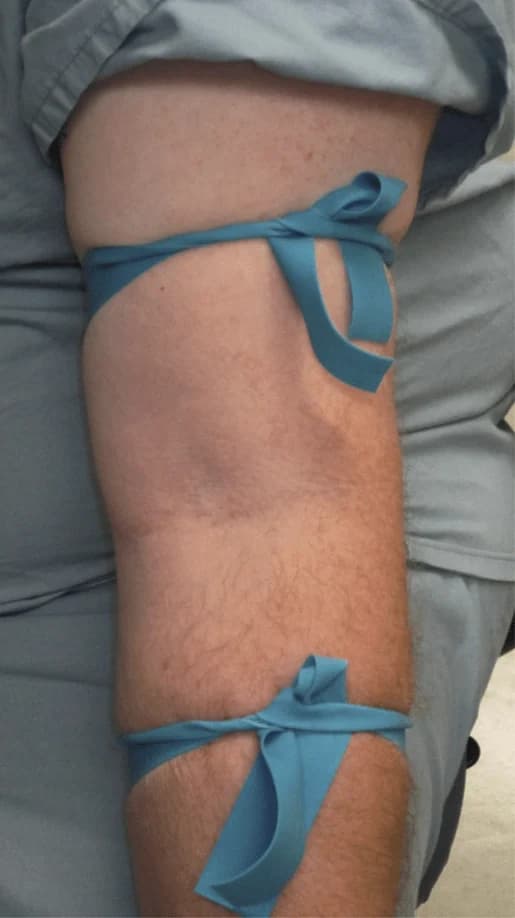
- The Side-by-Side Rule: If your first tourniquet is maximally tightened and the bleeding persists (or a distal pulse is still palpable), immediately apply your second tourniquet directly adjacent to—and just proximal (above) to—the first one.
- Multiple Injuries: High-velocity trauma, such as a tumbling fall down a rocky ravine or an animal attack, rarely results in a single isolated injury. You must be prepared to tourniquet multiple limbs simultaneously.
- Mechanical Failure: Extreme environments destroy plastics. Prolonged exposure to freezing alpine temperatures or blistering desert heat can cause the polymer windlass of a tourniquet to snap under extreme tension. A backup is your only lifeline.
Gear Discipline: How to Carry Them
- Echelon 1 Placement: Tourniquets belong on your body or strapped to the extreme exterior of your pack. A tourniquet buried under a sleeping bag in a waterproof sack is completely useless during a 3-minute exsanguination countdown.
- Buy Authentic: Never trust your life to cheap, counterfeit tourniquets from generic online retailers. Only carry CoTCCC-recommended devices, such as the authentic North American Rescue CAT or the TacMed SOFT-T Wide.
Packing the right gear is only half the battle. Knowing how to use it, when to pack a junctional wound, and how to safely convert a tourniquet after 4 hours of extraction is what saves limbs. Master the art of extreme hemorrhage control in the comprehensive 410-page manual: Off-Grid Medical Care.